
Less glare.
Keep screens readable and the room bright.
Can window film reduce glare without making the room dark?
Usually, yes. Glare is a problem of direct light rather than of brightness, and how much visible light a film lets through is a choice we make when specifying it. The aim is a room you can use all afternoon, not a room with the lights on.
Glare is direct light arriving at an angle your eye cannot ignore, washing out a screen or a page. Film reduces how much of that direct light reaches you while daylight still fills the room. Darkening the glass is one way to do it, and it is rarely the best one.
- Film is applied to the inside face of the glass you already have.
- The outward view is kept.
- Solar film reduces glare on screens and in living spaces.
- Glare and heat are related problems, and the film that best solves one is not always the film that best solves the other.
- How much visible light a film lets through is a specification choice, not a fixed property of window film.
- Film reduces glare. No film removes it, and none of them move the sun.
What you notice.
Film goes on the inside face of the glass you already have. Nothing is replaced and nothing structural changes.
- Screens and televisions stay readable through the afternoon
- Blinds stay open, so the view you paid for stays visible
- The desk beside the window stops being the worst seat in the room
- The room stays bright rather than dim
At home and at work.
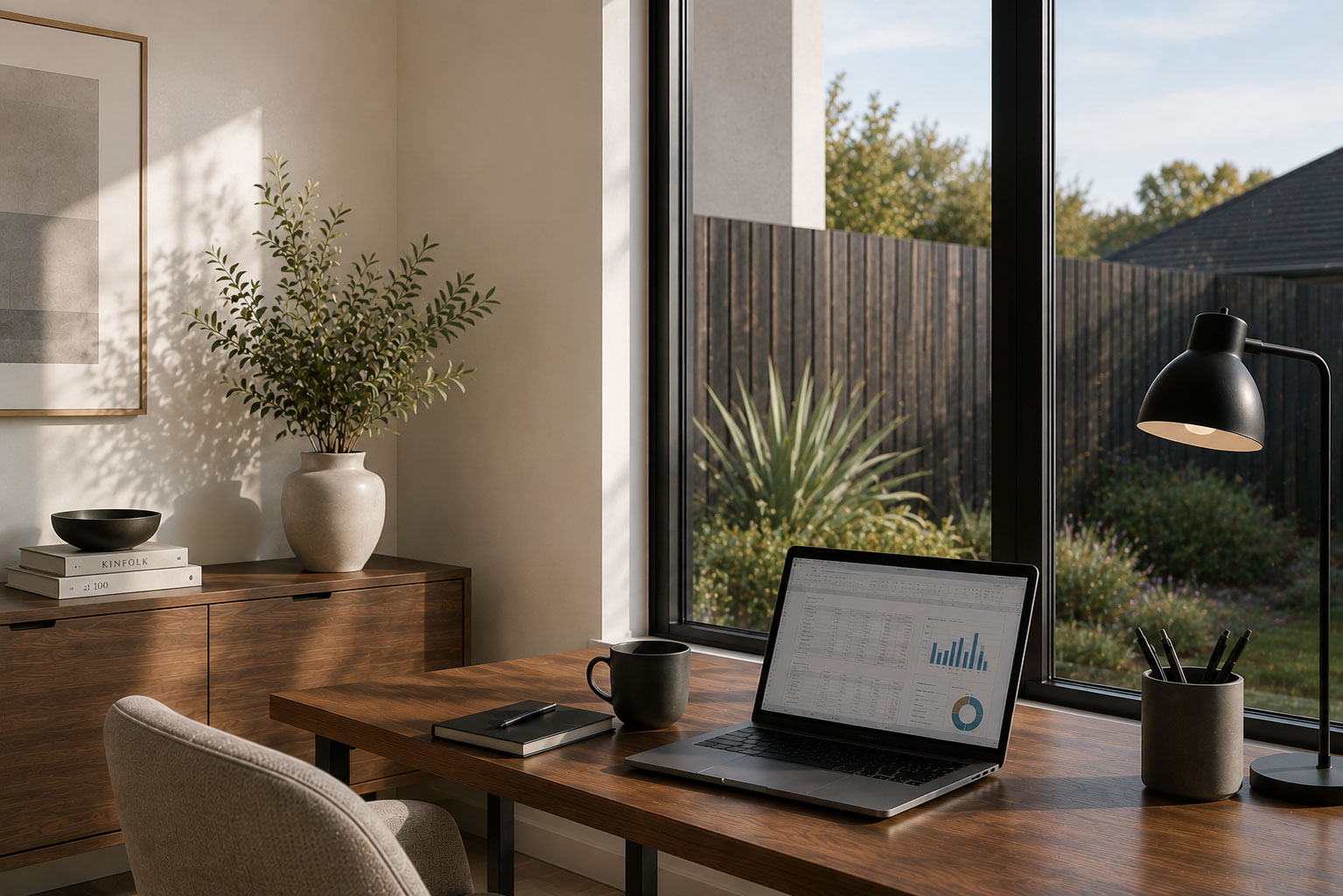
Home offices and living rooms where a screen sits beside the window. 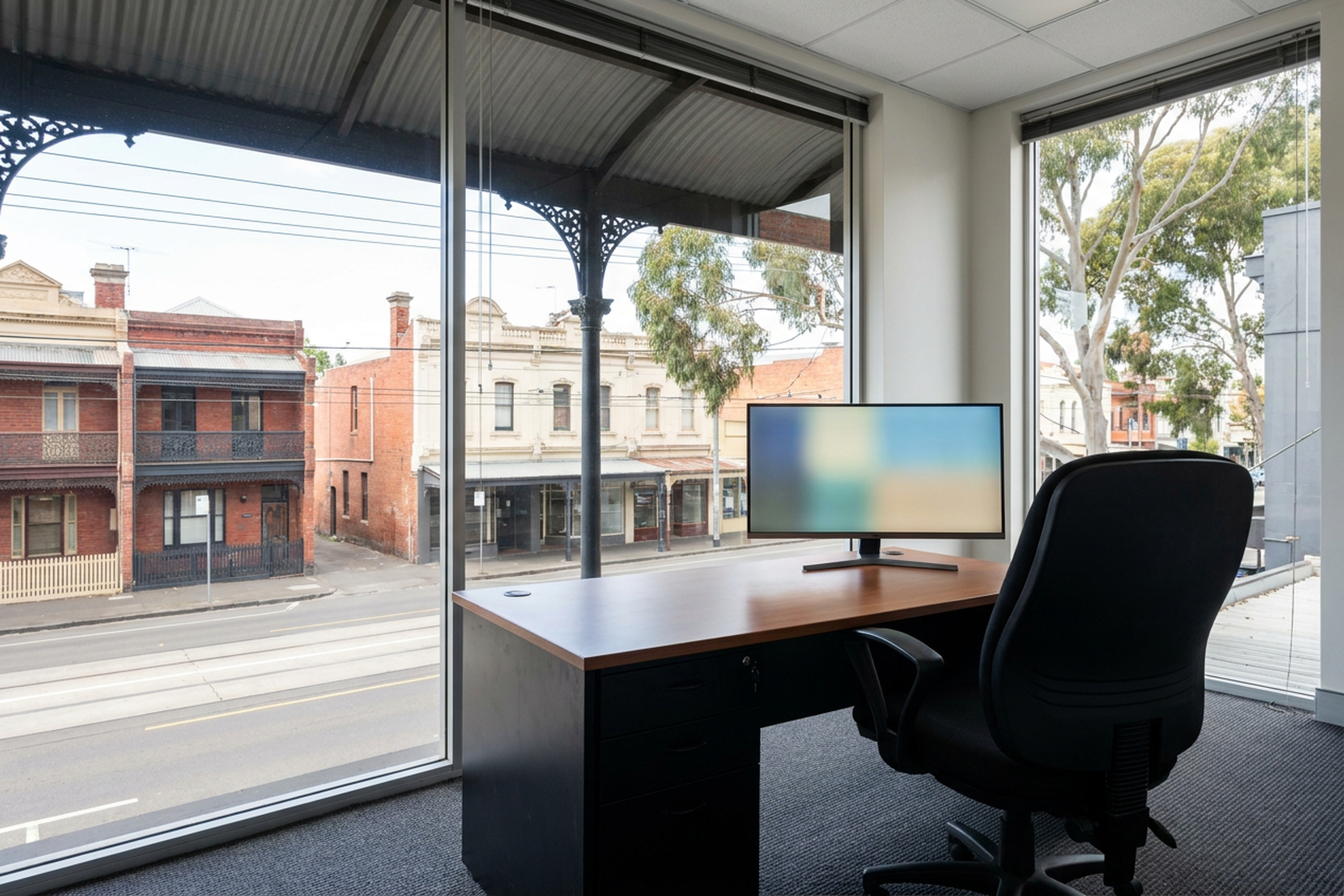
Open-plan floors and meeting rooms, with the blinds left open and the outlook kept.


Typical glazing.
- West and north facing living rooms
- Home offices and study desks
- Open plan floors with western exposure
- Meeting rooms and boardrooms
- Reception and atrium glazing
- Retail windows and display glazing
What it will not do.
Reduced, not removed
No film removes glare, and none of them move the sun. Where it sits low and looks straight down a room, film helps and a blind may still earn its place.
Darker is not automatically better
A heavily tinted film cuts glare and costs you daylight. The right specification is usually the lightest one that solves the problem.
It depends where you sit
Glare is a question of angle. Two desks in the same room can have completely different experiences of the same window.
Worth knowing.
Will it make the room dark?+
Will film fix glare on our screens?+
Will I still see out?+
Tell us about
the glass.
We confirm what suits your windows, then put a written quotation in front of you with the price, what it covers and how long it stands.
