
Less fading.
Filters UV to help slow fading. It cannot stop it.
Can window film protect my interiors from fading?
It can slow it considerably, and it cannot stop it. Ultraviolet light is the largest single cause of fading and film filters it at the window. Visible light and heat cause fading too, and no film removes those.
Fading is light breaking down colour over time. Ultraviolet light does most of that work and it is invisible, which is why a room can feel perfectly comfortable while its floors are quietly losing colour. Film filters ultraviolet light at the glass, before it reaches anything in the room.
- Film is applied to the inside face of the glass you already have.
- The outward view is kept.
- Film filters ultraviolet light, the main driver of fading in floors, rugs and upholstery.
- Ultraviolet light is one cause of fading. Visible light and heat also contribute, so no film stops fading altogether.
- The film being specified is set out in your written quotation.
What you notice.
Film goes on the inside face of the glass you already have. Nothing is replaced and nothing structural changes.
- Timber floors hold their colour longer where the sun lands
- Rugs, artwork and photographs age more slowly
- Stock in a display window keeps its colour while it sits there
- Nothing about the room looks any different
Protecting the things you live with.
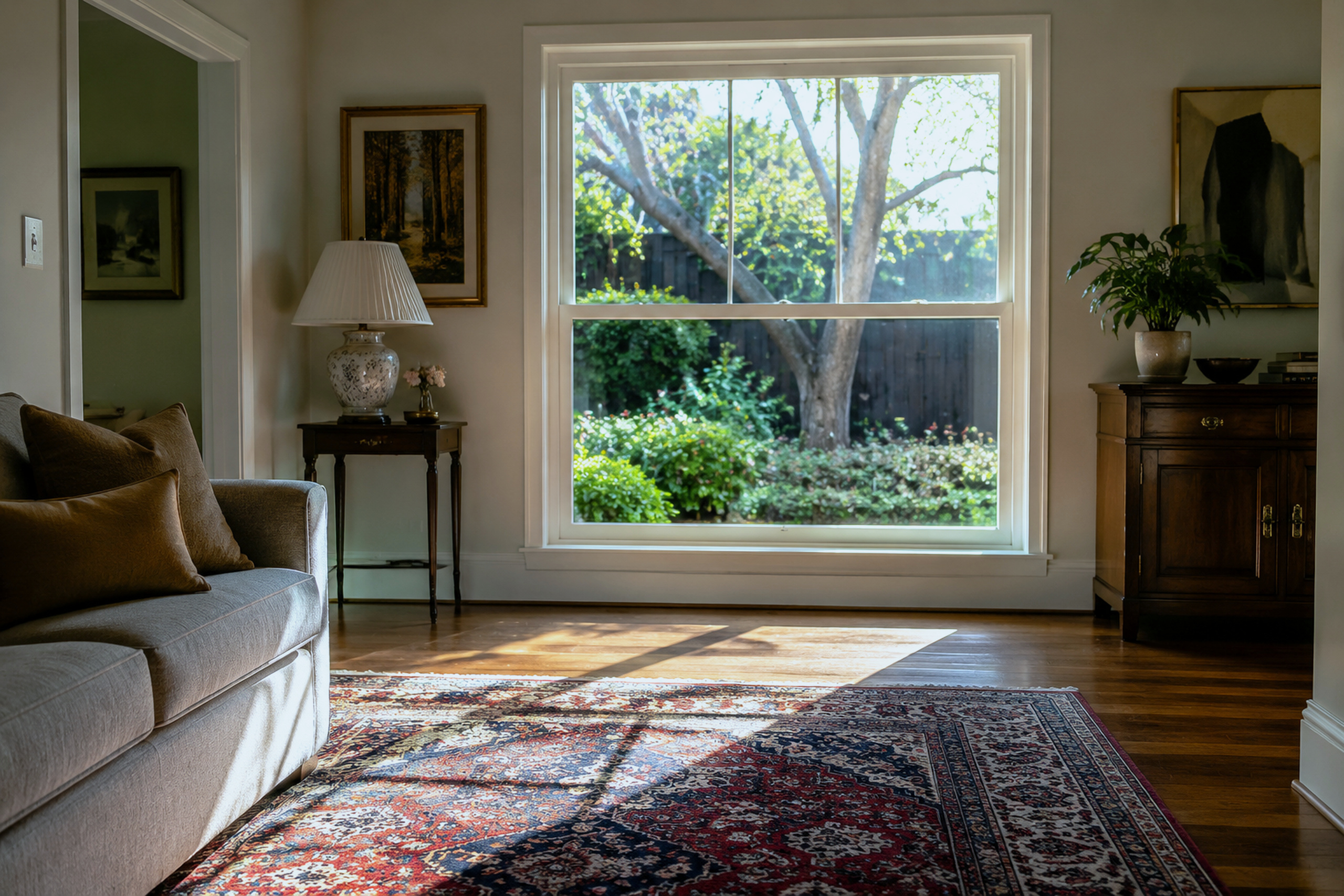
Rooms where timber, textiles or artwork take direct sun for hours a day.

Typical glazing.
- West and north facing living rooms
- Kitchens and dining rooms with large glazing
- Stairwell and skylight glass
- Retail windows and display glazing
- Reception and atrium glazing
- Restaurants, cafes and hotel glazing
What it will not do.
Slower, not stopped
Ultraviolet light is the biggest cause of fading, not the only one. Anything sitting in direct sun will still change over time.
It cannot undo what has happened
Film protects from the day it goes on. Colour already lost does not come back, and a rug that is half in the sun may keep the line it already has.
The figure belongs in your quotation
How much ultraviolet light a particular film filters is a manufacturer figure for that film. We give it to you against the film we are specifying for your glass rather than as a headline on a website.
Worth knowing.
Will it make the room dark?+
Can film go on double glazing?+
Will I still see out?+
Will film stop my furniture fading?+
Tell us about
the glass.
We confirm what suits your windows, then put a written quotation in front of you with the price, what it covers and how long it stands.
