
Privacy without darkness.
Break the sightline. Keep the daylight.
Privacy. In daylight.
Break the sightline into a room without closing it down. The daylight and the outward view both stay.
Obscuring and reflective films reduce what can be seen in from outside during the day. After dark, with the lights on, that reverses. Tell us about the room and we will recommend the next step.
Get a quote
What it looks like from outside.
In daylight the outer face of the glass reflects the garden and the sky rather than the room behind it. Standing in the garden, there is very little to see in.
At home and at work.
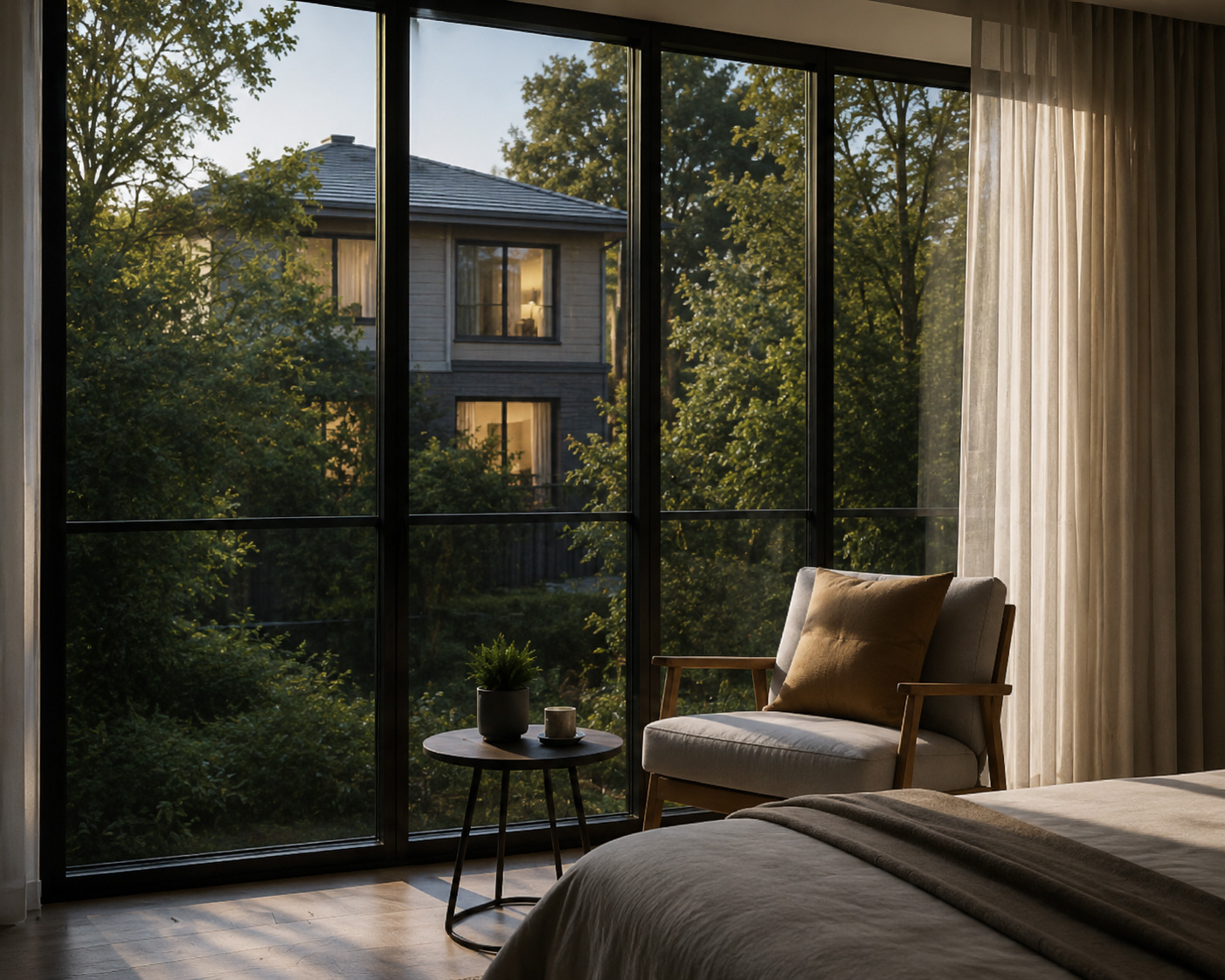
Ground-floor rooms overlooked by a neighbour, a footpath or a shared drive. 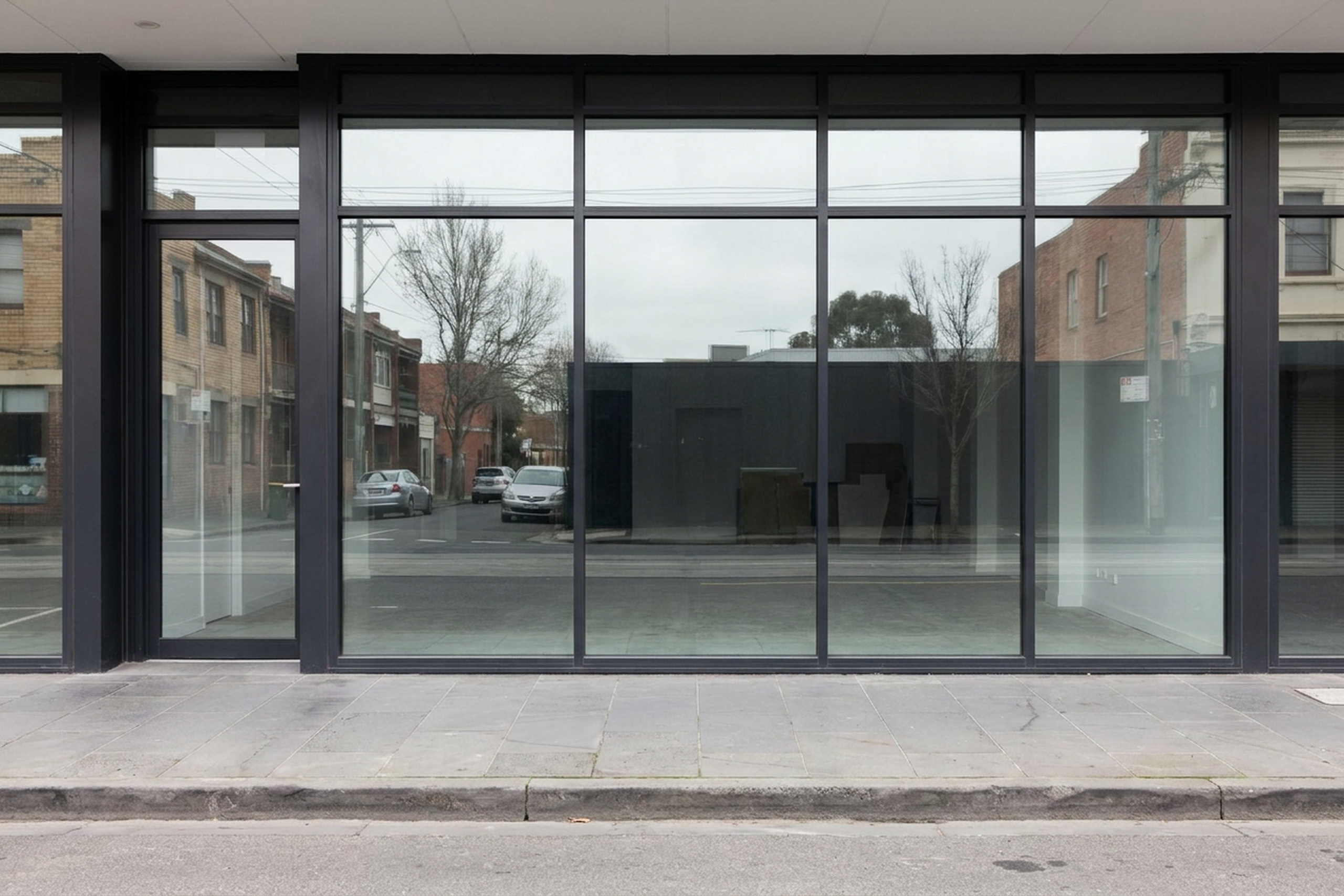
Street-facing offices, consulting rooms and ground-floor workplaces.


Read this part before you buy.
Most complaints about privacy film come from one misunderstanding, and it is the first of the three below.
Reflective privacy does not work at night
It depends on the outside being brighter than the inside. After dark with the lights on, that reverses and your room becomes the brighter side. If you need privacy in the evening, the answer is an obscuring film, or a blind behind a reflective one. This is the single most misunderstood thing about window film and we would rather you heard it here than after installation.
Obscured means obscured both ways
A frosted pane breaks the view in both directions. Where you want to keep the outlook, banding at eye level often removes the sightline that matters without giving up the window.
Privacy is not concealment
Film changes what can be made out through the glass. It is not a security measure, and it is not opaque unless you choose a finish that is.
Typical glazing.
- Bathrooms and ensuites
- Ground floor rooms facing a street or footpath
- Entry doors and sidelights
- Meeting rooms and boardrooms
- Office partitions and breakout areas
- Apartments where the glazing cannot be changed
Tell us about
the glass.
We confirm what suits your windows, then put a written quotation in front of you.
